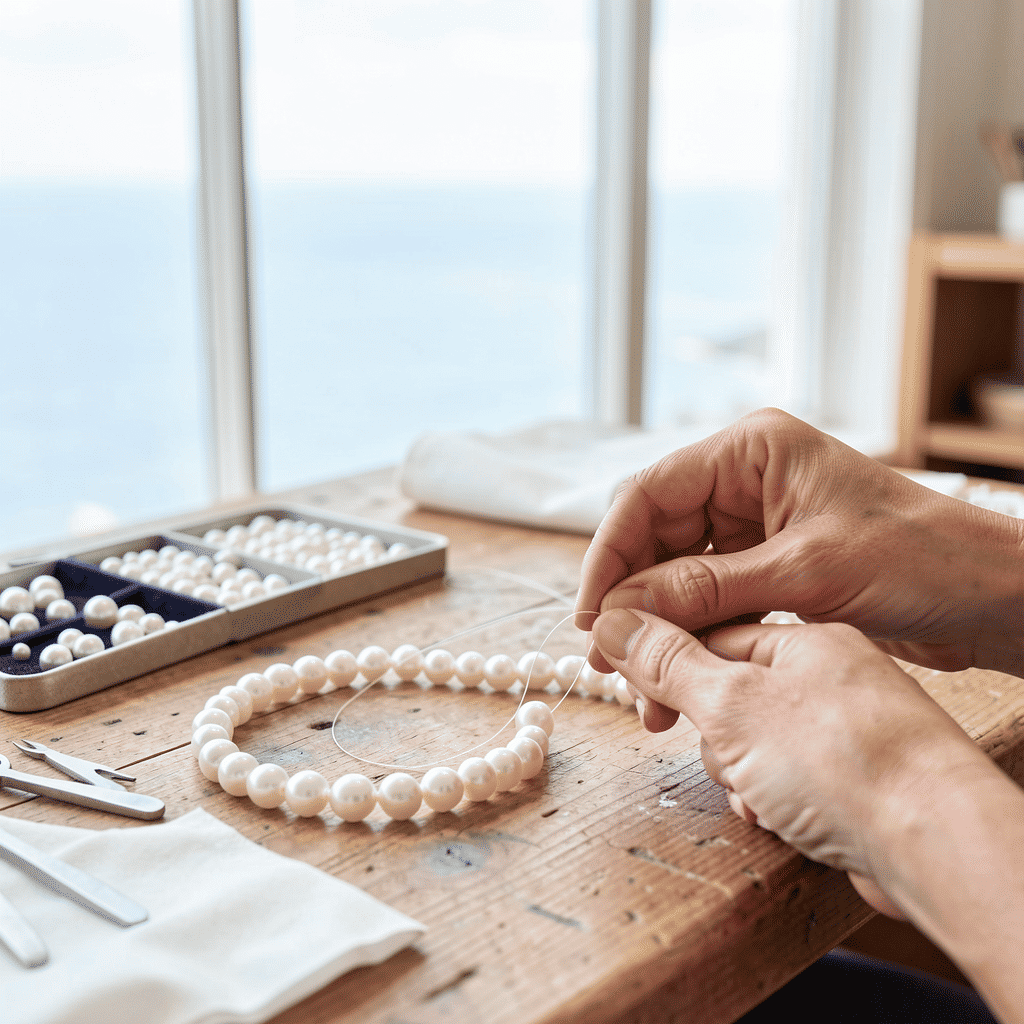
Pearl crafting is an art form that marries nature's timeless beauty with human creativity and expertise. The journey from the ocean's depths to the showcase of sparkling jewelry boxes is a process that involves meticulous attention to detail, skillful craftsmanship, and an appreciation for the history and allure of these lustrous gems.
The story of pearl crafting begins beneath the waves, where mollusks, primarily oysters, create pearls as a defense mechanism. When an irritant, such as a grain of sand or a parasite, becomes lodged inside the mollusk's shell, the creature secretes layers of nacre—a combination of calcium carbonate and a protein called conchiolin—around the intruder. Over time, these layers accumulate, forming a pearl. Cultivating pearls is an intricate process that requires not only knowledge of marine biology but also patience and care. Today, cultured pearl farms in countries like Japan, China, and French Polynesia have refined this process, ensuring a more reliable production of these marine treasures.
Once pearls are harvested, their journey into jewelry begins. This stage requires an eye for detail; pearls must be carefully sorted by size, shape, color, and luster. No two pearls are exactly alike, and the beauty of pearl jewelry often lies in finding pearls that, while unique, complement one another perfectly. The shapes of pearls range from perfectly round to baroque and irregular, each lending its own charm to the piece in which it is set. Color is another criterion, with pearls available in a spectrum—from classic whites and creams to exotic blacks, pinks, and even gold.
The crafting of pearl jewelry is where artistry meets precision. Pearls are often strung by hand, with each strand requiring hours of careful knotting. This knotting is essential not only for aesthetics but also to prevent the pearls from rubbing against one another, which could damage them over time. When creating more elaborate designs like necklaces, bracelets, or earrings, jewelers often combine pearls with precious metals or other gemstones, adding a modern touch while maintaining the elegance that pearls naturally convey.
Beyond the technical skills involved, there is an unmistakable historical and cultural richness to the art of pearl crafting. Pearls have been cherished for millennia, with their allure traversing civilizations—from the ancient Chinese and Egyptians to European royalty and modern-day fashion icons. Different cultures have imbued pearls with various meanings; in some societies, they symbolize purity and wealth, while in others, they are thought to bring protection and well-being.
Modern pearl jewelry designers continue to draw inspiration from these historical contexts, creating innovative pieces that honor tradition while also pushing the boundaries of contemporary design. This synthesis of history and modernity ensures that pearl jewelry remains relevant and desirable in an ever-evolving world of fashion.
In summary, the art of pearl crafting is an ode to the synergy between nature and nurture. It is an exploration of the delicate balance between preserving tradition and embracing innovation. From their marine beginnings to their final form as cherished adornments, pearls offer a story of transformation and timeless elegance—a testament to the artful minds and skillful hands that shape them into enduring symbols of beauty.